
Taken from a recent reprint by Tyneside Anarchist Archive
The following piece is from the rather excellent ‘TYNESIDE SYNDICALIST‘ No 15 June/July 1987 and was written in the face of yet another looming general election fiasco, quite apt with the current farce in our faces yet again…enjoy, like, care, give a share….
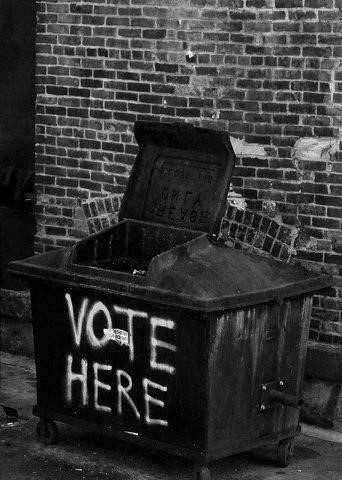
“As we approach another General Election the media circus is regurgitating the usual sickening clichés and nonsense about the difference it will all make. We are not going to go along with this by criticising the parties, policies or manifestos. Instead, we prefer to question the whole idea of parliamentary democracy, and to broaden the argument by talking about the underlying issues of authority, power and control.
Our system of government is geared to fitting in with the needs of capitalism. The small differences there are between the major parties concern how best to accommodate to the quest for profit of the multinationals and financial institutions. As voters we are presented with apparent choices of style, but we have no realistic opportunity to reject the whole sordid assumptions and practices of capitalism. So, our power to wield our votes to change things is mainly an illusion.
But that’s not all. The structure of any political party means that we are made even more passive by supporting or joining it. Parties consist of massive overbearing hierarchies where even straightforward and sensible change is virtually impossible to achieve unless the leadership already desire it. Changes that would imply removing control from the top obviously get nowhere.
Some people enter the party hierarchy with the intention of improving things from within. They very quickly get swallowed up by the dead weight of bureaucracy and neutralised by the control of those at the top, and it’s irrelevant how much support from the base they have.
The only other alternative is to get to the top themselves, but by the time they’ve managed it, the distortions and perverting effects of the hierarchy have inevitably taken their toll – so that the old status quo is now accepted. We can see this very clearly in one-time radical labour politicians or broad-left trade union officials who become more and more reactionary as they climb the ladder and leave the base behind. Meanwhile those at the bottom are left passive and powerless, and maybe worse off because of the time and effort wasted on keeping the faith in a “better leadership”.
Clearly this type of analysis applies to supposedly revolutionary parties and to trade unions just as much as to the big parties. If decision making isn’t placed squarely at the base, then the mass of ordinary member’s maybe active, but only in doing what they are told, what is permissible, and they are in no position at all to challenge the status quo. These days most organisations involving politics make a big show of internal democracy, but when it comes down to it those at the top have to agree before anything gets done.
But we have to take the analysis a bit further than this. Most people seem fully aware that they have no control, but still manage to muster up enough motivation to support the big parties and to make no effort to challenge bureaucratic and authoritarian control. We can present alternatives to hierarchies and powerless membership – in this paper we consistently offer ideas and examples of rank-and-file control, assembly – based decision making, mandated and re-callable delegates and so on. Such ideas are acceptable; people agree that they would be better. But there’s a tendency to say, “it won’t work” (even when given cast iron evidence of it working), and to not really want or be able to apply the ideas in their own real lives. It looks as though people feel more comfortable being passive, don’t want the bother of being responsible, in fact desire to be dominated. Why is this?
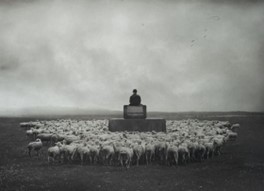
‘The desire to be dominated’
People aren’t completely logical; we all behave irrationally quite a lot of the time. So while working class people want freedom, struggle to make our lives better and recognise the injustices of society, other parts of us also desire to be controlled to let others make our decisions for us. That is why it is possible for Thatcher to attract so many of our votes. All of the other parties have massive blind spots to the problems of power and authority too and can’t afford to examine these areas because it would expose their own (equally large) shortcomings.
In this society virtually all of our lives are lived under the shadow of forms of authority that are completely out of our control. It is built into us to be subservient. It’s a difficult pattern to break down, but the best path is in active struggle. Real lived experience of battling against authority begins to give us confidence in our own collective power.
Experience of the double-dealing, betrayal and manipulation of politicians and trade union officials clinging onto their positions in the hierarchy tests our faith in their influence, whilst we know we can trust one another. So, rank and file control is not enough – we need also to be conscious of why we need it. Because otherwise we will find ourselves trusting the next plausible dominator who comes along, and the gains of our experience of collective self-control will be lost.”

 AnarCom Network