Articles

May Day Greetings on International Workers Day 2023

The AnarCom Network wishes all our comrades across the world a Happy and Revolutionary International Workers Day.

Below are some pictures from protests that have taken place around the world followed by our article on the origins of the modern May Day.

France

Stuttgart Germany

Kosovo
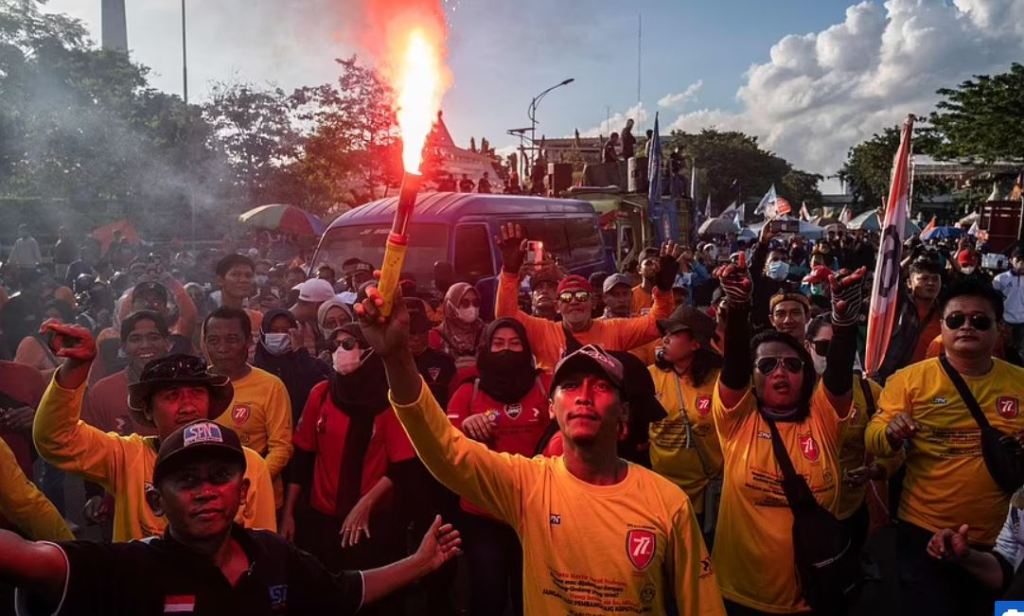
Indonesia
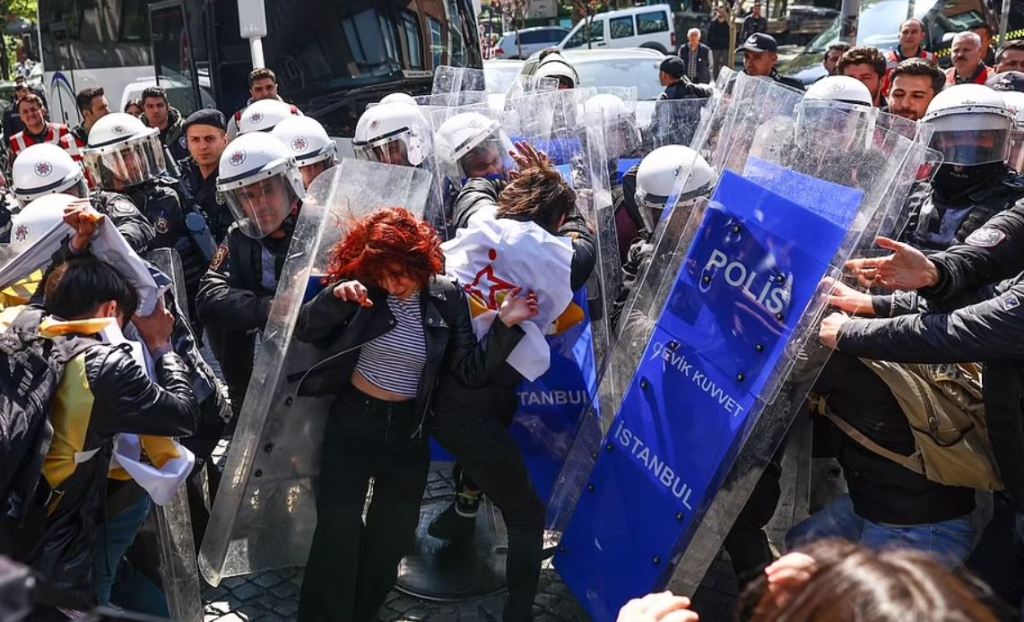
Istanbul Turkey
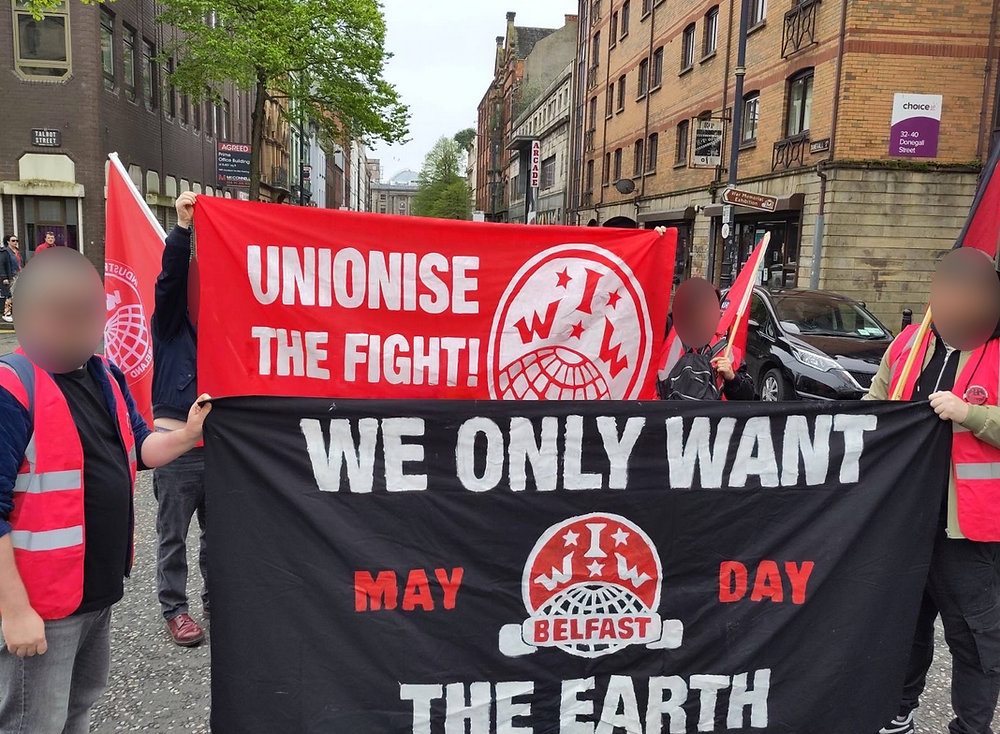
Belfast Ireland

The origins of May Day

A three-year depression; a banking collapse; falling production; a crisis of living standards and working conditions that lead to continent wide mass strikes and demonstrations. 

Capitalism’s response: the demonisation of migrants, foreign workers and strikers as militant anarchists.  Police violence and state repression.  This familiar story whilst sounding like today, is the birth of May Day as International Workers Day nearly 150 years ago.

The events that led to it were part of a rolling campaign by workers for the eight-hour day.   It began when the American Federation of Labour adopted an historic resolution which asserted that “eight hours shall constitute a legal day’s labour from and after May 1st, 1886”.

In the months prior to this date workers in their thousands were drawn into the struggle for the shorter day. Skilled and unskilled, black and white, men and women, native and immigrant were all becoming involved. This movement was particularly strong in the large industrial cities and on May 1st 1886, 400,000 rallied in Chicago

The beginning of May as a day for the celebration of the fruits of labour go back millennia as a pre-Christian pagan festival.  According to the anarchist historian David Graeber:  

“May day came to be chosen as the date for the international workers holiday largely because so many British peasant revolts had historically begun on that riotous festival.” (Graeber & Wengrow ‘A New History of Humanity’)

A Chicago newspaper of the time reported that that day: “no smoke curled up from the tall chimneys of the factories and mills, and things had assumed a Sabbath-like appearance”.

This was the main centre of the agitation, and here the anarchists were in the forefront of the labour movement. It was to no small extent due to their activities that Chicago became an outstanding centre organised labour and made the biggest contribution to the eight-hour movement.

2 years earlier they had produced the world’s first Anarchist daily newspaper, the Chicagoer Arbeiter-Zeitung, plus a weekly, Fackel, and a Sunday edition, Vorbote.  They were among the many labour militants from migrant backgrounds active across the city in many languages.

When on May 1st 1886, the eight-hour strikes convulsed that city, one half of the workforce at the McCormick Harvester Co. came out. Two days later a mass meeting was held by 6,000 members of the ‘lumber shovers’ union who had also come out. The meeting was held only a block from the McCormick plant and was joined by some 500 of the strikers from there.

The workers listened to a speech by the anarchist August Spies, who has been asked to address the meeting by the Central Labour Union. While Spies was speaking, urging the workers to stand together and not give in to the bosses, the strikebreakers were beginning to leave the nearby McCormick plant.

The strikers, aided by the ‘lumber shovers’ marched down the street and forced the scabs back into the factory. Suddenly a force of 200 police arrived and, without any warning, attacked the crowd with clubs and revolvers. They killed at least one striker, seriously wounded five or six others and injured an indeterminate number.

Outraged by the brutal assaults he had witnessed, Spies went to the office of the Arbeiter-Zeitung and composed a circular calling on the workers of Chicago to attend a protest meeting the following night.

The protest meeting took place in the Haymarket Square and was addressed by Spies and two other anarchists active in the trade union movement, Albert Parsons and Samuel Fielden. Throughout the speeches the crowd was orderly. Mayor Carter Harrison, who was present from the beginning of the meeting, concluded that “nothing looked likely to happen to require police interference”. He advised police captain John Bonfield of this and suggested that the large force of police reservists waiting at the station house be sent home.

It was close to ten in the evening when Fielden was closing the meeting. It was raining heavily and only about 200 people remained in the square. Suddenly a police column of 180 men, headed by Bonfield, moved in and ordered the people to disperse immediately. Fielden protested “we are peaceable”.  At this moment a bomb was thrown into the ranks of the police. It killed one, fatally wounded six more and injured about seventy others. The police opened fire on the spectators. How many were wounded or killed by the police bullets was never exactly ascertained.

A reign of terror swept over Chicago. The press and the pulpit called for revenge, insisting the bomb was the work of socialists and anarchists. Meeting halls, union offices, printing works and private homes were raided.

All known socialists and anarchists were rounded up. Even many individuals ignorant of the meaning of socialism and anarchism were arrested and tortured. “Make the raids first and look up the law afterwards” was the public statement of Julius Grinnell, the state’s attorney.

What followed was a famously sham trial that the Governor later, declaring the anarchists, innocent of the charges. described as based on: “hysteria, packed juries and a biased judge”.  Of the eight anarchist workers tried, 4 were judicially murdered while a 5th took his own life.   When Spies himself addressed the court after he had been sentenced to die, he was confident that this conspiracy would not succeed:

“If you think that by hanging us you can stamp out the labour movement… the movement from which the downtrodden millions, the millions who toil in misery and want, expect salvation – if this is your opinion, then hang us! Here you will tread on a spark, but there and there, behind you – and in front of you, and everywhere, flames blaze up. It is a subterranean fire. You cannot put it out”.

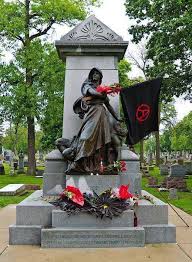
From then on May Day demonstrations spread worldwide to commemorate the “Chicago Martyrs”, until the international labour organisations adopted it across the globe in 1889.

It has internationally become a day when workers express their solidarity and the power on the street. Governments have always feared it and many have tried to cancel or change it – American capitalism introduced Labour Day in October to replace it, Thatcher in the UK abolished it in the early 80s replacing it with the May bank holiday.  It continues to mobilise across the world.

There is no new lesson to learn from this today.  The lesson remains the same. Capitalism and its relentless assault on workers continue to this day as it did then, with austerity, violence and war.  The villainous class remains in power, our struggle against it, to overthrow it, towards emancipation, continues.
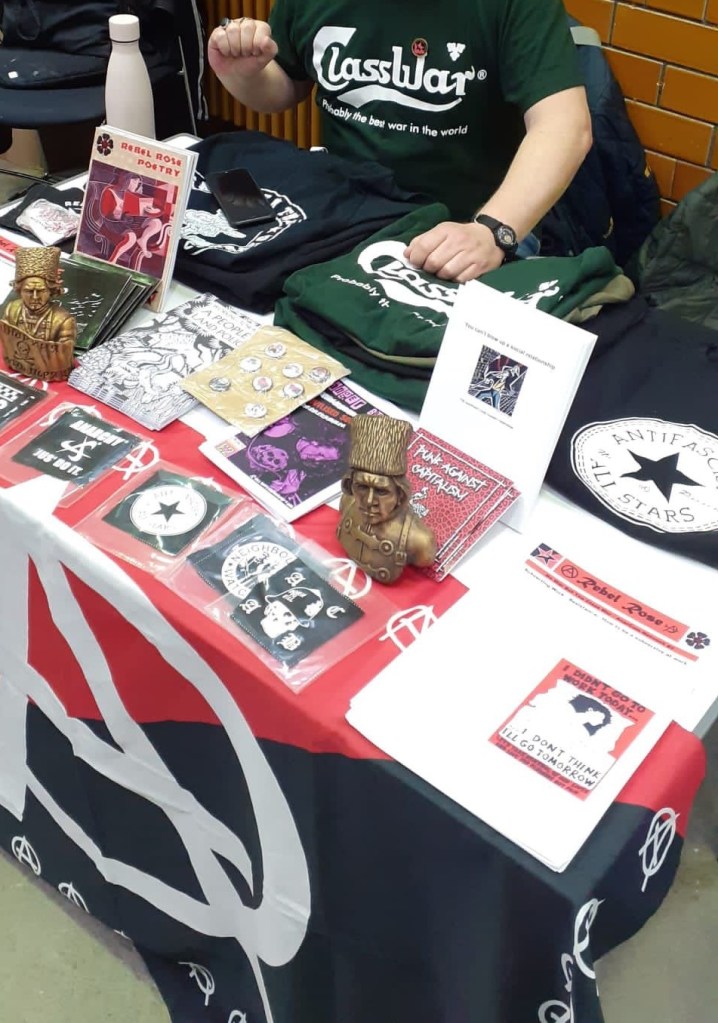
AnarCom Network Upcoming Stalls for 2023

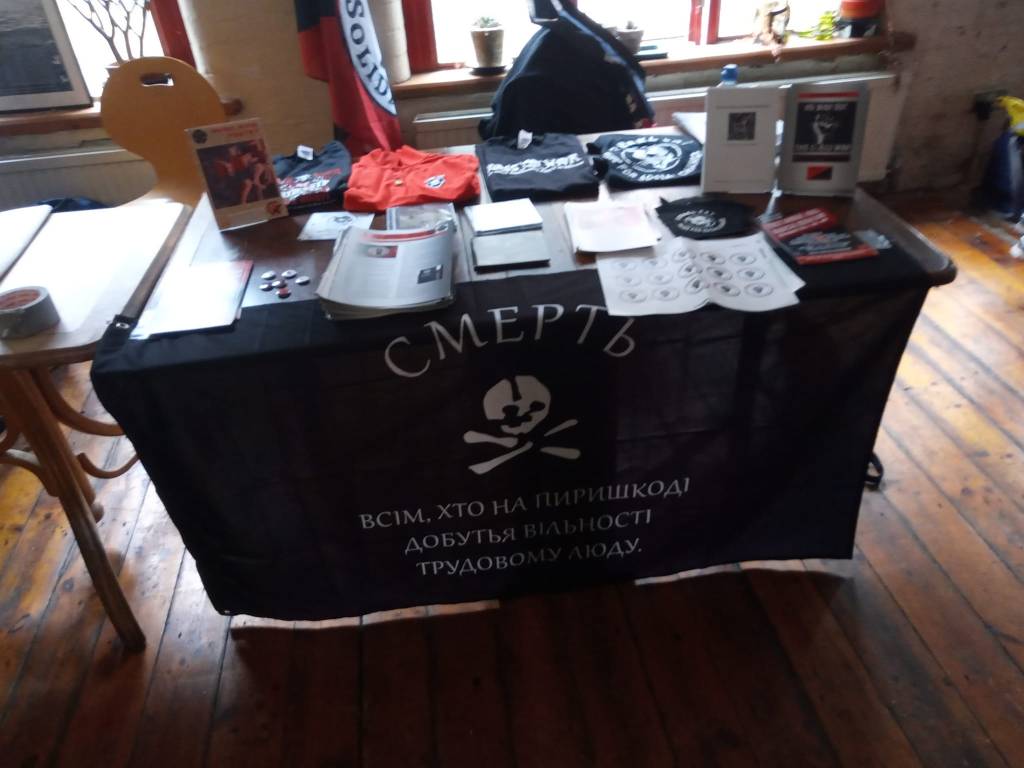
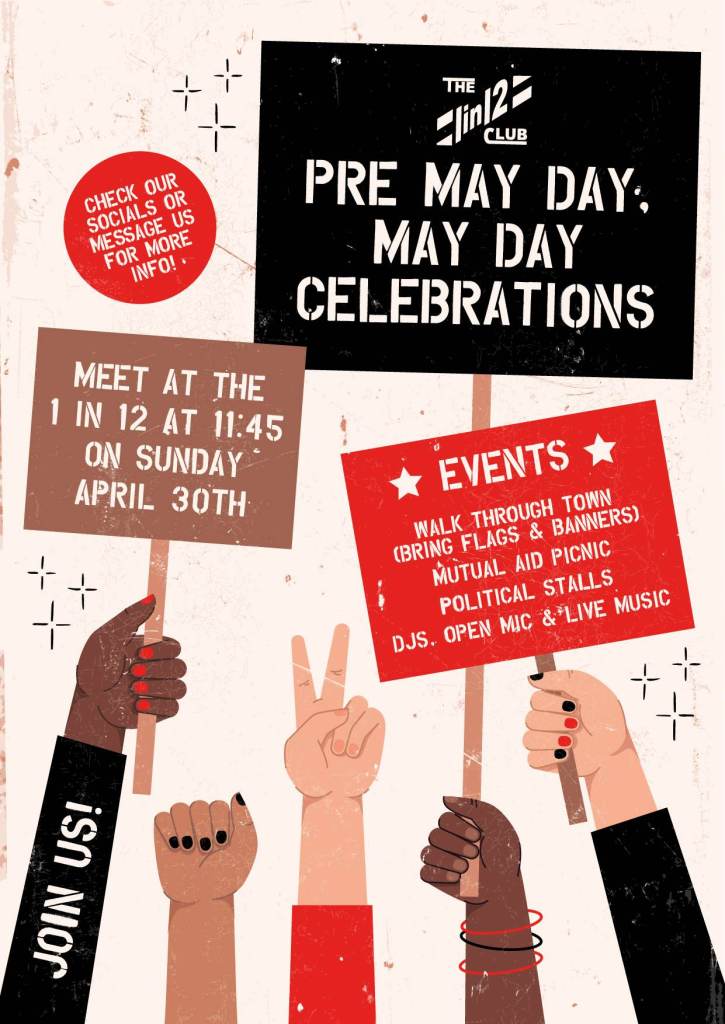
30th April – pre May Day event, Bradford @ 1 in 12 Club

13th May – Banners Held High, Wakefield @ City Centre

27th May – Red and Black Clydesdale, Glasgow

12th August – Hull Radical Bookfair, Hull @ Danish Church

2nd September – Bradford Anarchist Bookfair, Bradford @ 1 in 12 Club

4th November – Manchester & Salford Bookfair, Manchester @ People’s History Museum

Pathologising Resistance

Not just as an anarchist, but as a gay man and psychotherapist, I’ve spent most of my life either not fitting in, or working with people who feel for some reason that they don’t.

My work initially was with sexuality, identity and gender dysphoria, focusing over the last 20 years on complex trauma and more recently, neuro-diversity and ‘spectrum disorders’. 

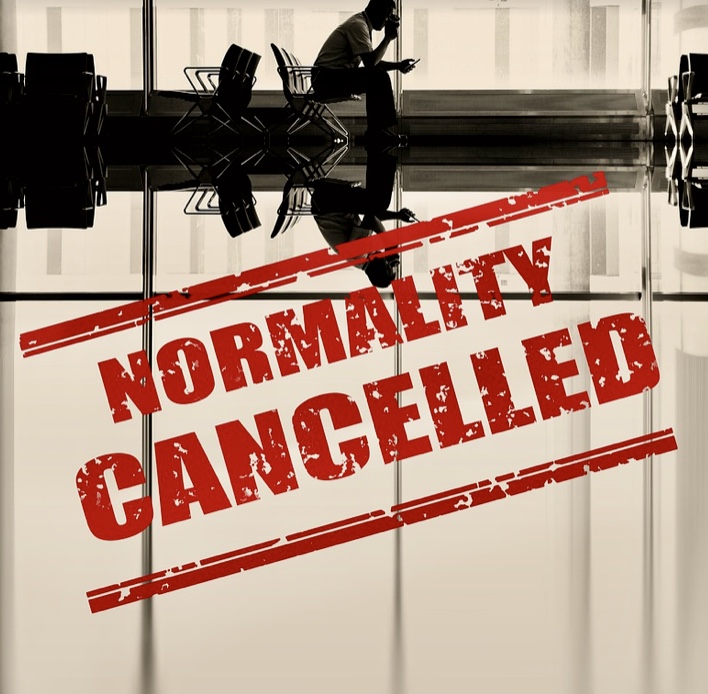
If there is one overwhelming insight I’ve gained it is the state’s obsession with pathologising difference, generally described as dysfunction or disorder.  Differently functional is seen as ‘abnormal’, sick or deviant.  Whatever the politico-medicalised framing of well-being intervention: medication; supervision; care in the community; case management etc, the end product for the individual is generally repression.

Government itself doesn’t walk round slapping people and nor do the bosses.  At work this is left to HR algorithmic management methods, on the street it’s left to the police and mental health services, economically, the slap is disenfranchisement and poverty, and in childhood, to schooling and discipline.  At home, the nuclear family struggles from the start by its own experience of this machine, neither educated nor supported in how to respond. 

But how did these conditions – unreferenced until the industrial era, suddenly appear? And what is this supposed ‘normal’ neurotypicality that these deviations are supposed to threaten? 

It’s no accident that we don’t have any attempt to define psychological disorder until the advent of industrial revolution. The industrial revolution made being human more complex than it had ever been.  Until the 18th century there had been no shared concept of universal time, time could vary from village to village and county to county. Science didn’t just create the technology of accuracy but did it to meet the need for the new class of exploiters to utilise it.  

Many misinterpret dating inconvenient change to the industrial revolution as imagining a fantasy longing for primitive times past.  That fundamentally misses the point. Nobody craves a return to painful dentistry and toilets that don’t flush!  But the experience of being human fundamentally changed with the clock, the factory, wage labour and profit. 

Henry Stanley Miller’s study of pre-Industrial peasant working conditions (‘Life on the English Manor’ 1987), concludes that a day’s work was considered to be the period from morning to lunch. This averaged about 6.5 hours of work during the peak of summer.  Even for the self-employed proto-capitalist artisan class, rarely exceeded 8 hours.  Life may be hard for sure, but took place in the context of settled communities where each was known and mutually essential to survival. 

There was no such thing as an aspergic midwife; a dyslexic baker; an ADHD blacksmith or an autistic ploughman.  Instead differences were the character components of a community, some the wise, some the truth speakers, some the visionaries   some the listeners and so on. 

Then, the advent of capital, the creation of credit, investment, land clearances and mass impoverishment feeding the factories in which waged labour replaced craft and occupation. 

It also brought the discipline of the factory clock and its overseers. 

Functionality became redefined for financial necessity and social control: clock on time; permitted breaks only; stay to the end of the working day defined neither by self nor season.  Demand nothing, eat sleep repeat until squeezed dry. 

In addition to the generational trauma caused and the need for standardisation in labour practice (or at least behaviour and expectation), difference became subversive and characters to be judged dysfunctional.  The refuseniks, habitual malcontents, fantasists and dreamers.  Ultimately the outcasts, anti-socials and unemployables. 

In preindustrial society communities were historically rural and geographically stable.  In industrial society, the experience of community at least reproduced itself in the form of industry and (re)location. 

Post-industrial society however has presided over its virtual abolition where almost all collective concepts of community, whether it be clan, extended family, geography, trade or work have ceased to exist.

Thatcherism made material the experience that there is “no such thing as society.” This has further atomised the human experience to a point where many feel excluded or at the edge of exclusion. 

Struggle for belonging and community has more and more expressed itself in individual terms, in identity often in isolation.  In some ways our natural human instincts to make communities where we can, have left us transient with a lack of permanence with those we feel have shared interests.  While understandable, it is desperate and economically without power.  It makes us more easily dividable and targetable setting one to go against the other. 

The democratic construct necessities the acceptance of this ‘individuality’ whilst pointing the finger at those who refuse to accept.  The angry black man; the hysterical woman; the troublesome Unionist; the selfish gay; the ‘safe-space’ threatening trans, the crazy anarchist. 

The reality is that diognoses often serve to blame the individual for psychological dysfunction.  That dysfunction being essentially distress.  This is the new norm – deep unhappiness and the necessary cognitive dissonance of telling ourselves a story about our lives to make our experience sound acceptable despite what we actually feel.  This incongruence, the suppression of our emotional life, is the universal price we pay to stomach our imposed existence in capitalist society.

Professionally I’m unsure if I’ve genuinely encountered normal or authentic ‘neurotypicality’.  Instead I see people forced to change shape to conform, those who struggle less consequently defining functional, and those for whom changing shape can be unmanageable and traumatic defining the dissident.  The temperamentally unsuited to capitalism at an advanced stage of social decomposition! 

Increasingly I am seeing people diagnosed with PDA (Pathological Demand Avoidance) or ODD (Oppositional Defiant Disorder).  The latter, mostly diagnosed in childhood are defined as uncooperative, defiant, and hostile toward the demands of peers, parents, teachers, and other authority figures.  The former describes those whose main characteristic is to avoid everyday demands and expectations to an extreme extent.  Refuseniks of externally applied order. 

None of this is to underplay the reality that some people are significantly vulnerable and debilitated by some aspects of neurological divergence from birth, but most falling into the diagnostics are simply different.

For liberalism it is expedient to demonstrate acceptance, though generally in the form of toleration, itself an insidious form of oppression.  This acceptance doesn’t sit easy with them – witness to somersaults over conversion therapy, faith endorsement of same sex relationship or the furore over gender recognition.   Where diagnoses occur, consequences follow. 

Neuro divergent activists point to the ‘Triad of 70’:  People living with these diagnoses are 70% more likely to attempt suicide; 70% more likely to be unemployed and 70% more likely to die before the average age of mortality.  Difference is manipulated to lead to exclusion and creates vulnerability and a sense of powerlessness.  An experience shared across marginalised or minority communities, it is the lived experience of racism, sexuality, gender and identity, and class. 

This experience breeds rebellion and is consequently described as such and pathologised (Emotionally Unstable Personality Disorder currently popular).  Despite that over time the target groups and diagnostics may change with changing context and political need, the establishment concepts of normality, mental health, work and functionality remain the platform from which dissidence and resistance is diagnosed and the rebellious dealt with. 

Article by Dreyfus

Statement concerning S., comrade who is in a life-threatening condition following the Sainte-Soline protest

This appears via our Czech Comrades in Tridni Valka:

Source: https://camaraderevolution.org/index.php/2023/03/26/communique-au-sujet-de-s-camarade-au-pronostic-vital-engage-a-la-suite-de-la-manifestation-de-sainte-soline/

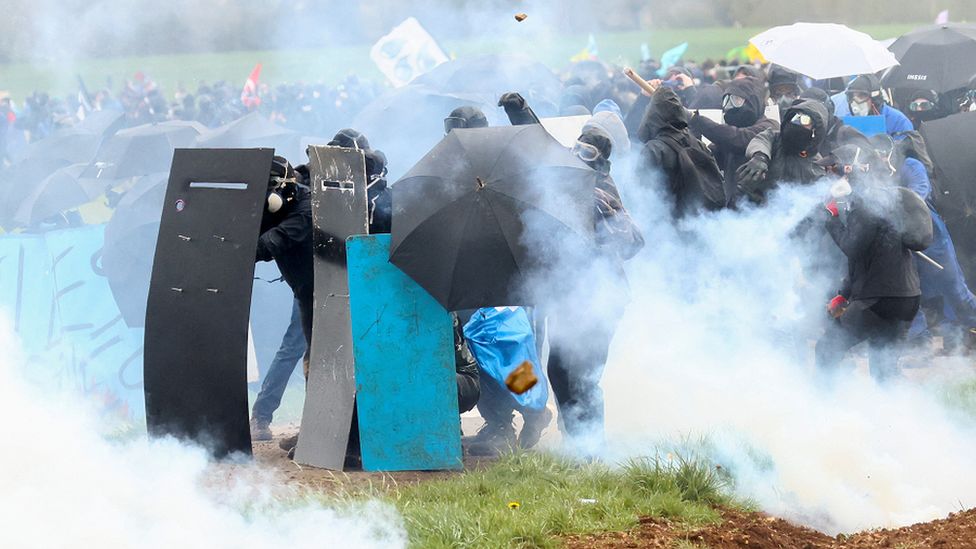
On Saturday the 25th of March at Sainte-Soline, our comrade S. was hit in the head by an explosive grenade during the protest against the giant retention basins. Despite his critical condition, the prefecture deliberately prevented the emergency services from intervening at first, and from transporting him to a special care unit in a second phase. He is currently in a neurosurgical intensive care. He is still in a critical condition.

The massive outbreak of violence that the protesters have gone through led to hundreds of wounded, and many of them suffered serious physical injuries, as we can read in the various reports available. The 30 000 protesters came with the aim to block the construction site of the Sainte-Soline giant retention basin, which is a water-appropriation project defended by a minority for the benefit of a capitalist model that has nothing more to defend other than death. The violence of the armed wing of the democratic State illustrates it vividly.

In the sequence initiated by the movement against the pension reform, the police mutilates and tries to assassinate to prevent the uprising, to defend the bourgeoisie and its world. Nothing will dampen our determination to put an end to their reign. On Tuesday March the 28th and on the following days, let’s strengthen the strikes and the blockades, let’s take the streets, for S. and all the wounded and the imprisoned of our movements.

Long live the revolution.
Comrades of S.

PS: If you have any information concerning the circumstances of the injuries inflicted to S., contact us at: s.informations@proton.me

We wish that this statement can be spread as massively as possible.

All Quiet on the Western Front…?

“Beware the Ides of March” Shakespeare.

The ‘ides of March’ (15th) saw the largest number of people on strike in the UK for a generation, but blink and you may have missed it.  While French workers bring paralysis to municipal functions to defend pensions and conditions from attack, European class struggle’s western front is appearing strangely quiet.

Some Health Unions have conceded following firefighters earlier on in March.  Others have, like the teaching unions, paused for negotiations, while the UCU higher education union has sent an e-ballot asking whether its members wanted to consider a ballot on the strikes despite no new proposal on offer.  Similarly, education strikes have been called off in Scotland and Wales.

In February the postal workers union, the CWU, cancelled its planned strike action after a legal challenge. The union’s legal teams cited laws that are ‘heavily weighted against working people’.  What happened to the TUC’s call for rolling actions against new anti-strike laws let alone existing ones?

Could it be the union leaderships are just surprised they have institutionally survived this challenge so far and want to quit before it gets too scary?  The government’s tactic is clear: pacify those workers they think have the most public sympathy (health, emergency, teachers), to leave the most militant industrial workers isolated and defeatable.

Despite 8 months of escalation, lost wages and increasing hardship, effective coordination, including mutual commitment to hold out for settlement across trade and sectors that redresses decades of decline and refuses war austerity, has failed to materialise.

Instead the union bureaucracies, refusing tuppence, have marched their members to the top of the hill to settle for tuppence ha’penny.  The piecemeal staggering of action over days and regions has undermined momentum and confidence to a point where some will now, if reluctantly, accept this as a win.

It is a defeat and union leaders have been all too eager to walk in to the governments cul-de-sac.  The causes of the strikes – capitalisms austerity to fund war, have not changed nor has the increasing hardship and impoverishment of the working class. 

Momentum is being lost and unification has failed, exemplified most starkly in the division amongst health unions. Paris burns while Britain waits by the embers.

On capitalisms other western front, Russia’s borders with Ukraine, Putin’s widely anticipated new offensive has begun with embarrassing failures that undermine its ability to change momentum as the war passes its anniversary. Western officials and analysts suggest Russia lacks capacity, except in numbers, while cautioning that the situation could quickly change.

UK defence secretary Ben Wallace claims that 97% of Russia’s effective military is now inside Ukraine, while his US counterpart says that “Russia is continuing to introduce large numbers of troops into the theater. Those troops are ill-equipped and ill-trained and because of that they’re incurring a lot of casualties.”

NATO strategists are using Bakhmut to fix Russian focus and bleed it white, as the Germans did with the French at Verdun n 1916.  Both Ukraine and Russia have staked their reputations on it.  The lack of dynamic is sheer bloody exhaustion on a mountain of workers corpses. 

The aim is to ferment Putin’s quarrelling forces, the Wagner machine versus the military establishment.  The impasse will most likely be broken by NATO’s technological tour de force once supplies have arrived on the battlefield, generating a replacement frenzy by the capitalist arms economy. 

Russian technology may be running short and its troops lacking in morale and quality, but as a cynical Russian proverb says “quantity has a quality all of its own”.  Any such break through would not be enough to end the conflict, so the cash machine and the meat grinder will continue hand in hand. 

Every diversion on both fronts, the class struggle at home and it’s bloody mirror in Ukraine is being thrown in.  Here, blaming small boats and refugees; blaming Gary Lineker and the BBC; blaming the sick, disabled and the just ‘had enough’ for failing Britain by not working.

Abroad, blaming Asia for not taking sides whilst blaming its largest economy, China, for taking sides, blaming Putin for being illegal.  Meanwhile we emerge from a cold costly winter not two steps forward but one step back, becoming poorer as the wealth of war profiteering reach new heights.

As revolutionists we stand by our perspective that peace begins with victory on the home front.  The effective collaboration of organised Trade Unionism with the state’s capitalist agenda is not a betrayal, it is their job! And in doing their job they also pursue the agenda of the war profiteers.

We know from the picket lines workers remain unhappy and call for them to refuse both the divisions and paltry compromises the union leaders are trying to sell them, to continue to fight for the outcome they wanted and for mutual solidarity with those still fighting. 

For rank and file coordination and escalation outside of the control of the Union structures.  Our prosperity and peace depend on it.

Article by Dreyfus

Love Crisps Hate Racism – Class and Culture Wars

The recent furore over Gary Lineker’s tweet that has ignited a firestorm on the political right [and to a lesser degree on the left] after he suggested on Tuesday that the British home secretary, Suella Braverman, was using language reminiscent of 1930s Germany to promote a plan to stop asylum seekers who arrive on boats across the English Channel.

The right predictably attacked him for using his “celebrity status” to promote woke ideas with over 36 Tory supported by some Labour MPs demanding he be axed from the BBC.  The BBC reacted by dropping him from their flagship football programme Match of the Day.  This led to other co presenters and pundits as well as commentators refusing to take part or “fill in” for him.  The final straw came when numerous football players asked the Professional Footballers Association [PFA – Footballer Union] for advice on boycotting the BBC’s coverage and got the go-ahead leading to Football Focus and Final Score being cancelled while Match of the Day will show matches using Sky TVs coverage only.

Meanwhile some on the left have criticised Lineker for his wealth and being critical of Corbyn.

So why should we care much less support the BBC boycott? 

Firstly, we must understand that football is a sport supported by a mass of working-class people and even though football is now a game of money and corruption at the highest levels it still commands massive loyalty amongst the working class and to dismiss it is to dismiss the working class, something that happens far too often on the left.  We need to engage with the working class and for class struggle revolutionists this is of crucial importance because many on the left will dismiss it as it doesn’t fit their nice little boxes of how you should oppose the government/state.  Until we do this we will always be a fringe movement.  We have a much harder fight in the UK because the so-called leaders of our class are reformers and traitors whether politicians, union leaders or the left as a whole.

It is also important because for the past couple of years (here in UK) there has been a concerted effort to say anyone with human decency is “woke/snowflake” and an agenda is being pushed to try and turn people against this.  To most people the BBC was still the independent mouth of the media, a paragon of “democracy”, after all It’s “our BBC”… they’d never lie to us!

Only a few days ago The BBC has decided not to broadcast an episode of Sir David Attenborough’s flagship new series on British wildlife because of fears its themes of the destruction of nature would risk a backlash from Tory politicians and the right-wing press, the recent events shows that not only is the BBC not impartial but a state run broadcasting company but also how craven the they are, even more than the Lineker furore it shows that the BBC aren’t ‘neutral’  and on climate change they’re actively trying to down play the climate catastrophe.

What is happening now is a reaction to the “anti-woke” rhetoric put out there by the press/political parties etc and the general shift to the right that is taking the form around this. 

This is why it matters. It is also about how the state and media are sanctioning anyone who says anything that doesn’t fit their agenda while supporting those government fawners like Fiona Bruce as she defends domestic violence – when she described Stanley Johnson’s assault on his wife where he broke her nose as a “one-off”.  Despite condemnation from domestic violence charities and organisations the BBC defended her saying she was not expressing her personal views.

In the end this is not a football story. This is not a Gary Lineker story. This is a story about the government thinking it can silence criticism of its sickeningly inhumane policy of making applying for asylum essentially illegal. It is about the government using language that dehumanises and vilifies vulnerable people in desperate situations. Lineker called that out. The government objected. The BBC – fresh on the heels of censoring a David Attenborough programme for fear of government objections – behaved in a way that only amplified the point Lineker was making.

What Lineker said was important but no more important than what Joan Salter an 83-year holocaust survivor said in January when she confronted Braverman over the governments inhumane immigration policies. 

“The Holocaust began in a country where Jews and non-Jews had lived together in peace for generations. The small Jewish population – less than 1% – was so integrated into German culture that the majority looked upon themselves as Germans, with a variety of degrees of adherence to Jewish culture and traditions. So how did this relative harmony turn to hatred in such a short period of time? Through the use of language. The language of hate and division.

This was the method used by the Nazis to turn ordinary people, who went home each night to their wives and children, into the monsters capable of marching millions of Jews and other minorities – people just like them – into the gas chambers. It is what enabled ordinary soldiers to return to their wives and children, satisfied that they were protecting their country from social problems caused by people whom their government had convinced them were less than human”.

The government and the BBC want this to be a “Lineker furore”. It isn’t. It’s a callous and inhuman government furore.

We must take heart from the solidarity of the football community over this and build upon its foundation.

Article by Mikey Dredd