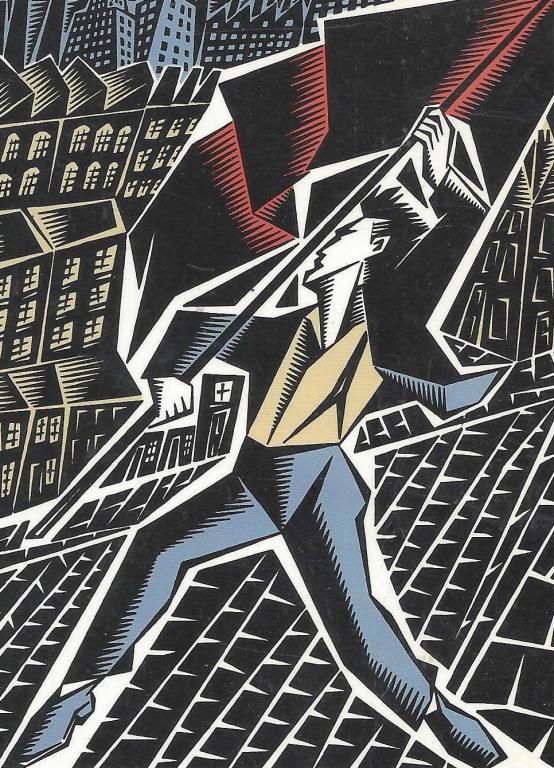
War – the faces of Capitalism unmasked.

Graffiti by Bergen-based artist, AFK.

Israel demands the exodus of a million Palestinians in 24 hours, in a sickening parody of biblical proportions.

Netanyahu’s gambit in Gaza is taken directly from the playbook of Putin and Assad.  Collective punishment through annihilation. 

The dictatorial destruction of Grozny, Aleppo and Mariupol is reenacted in the democratic ‘free world’s’ endorsement of the destruction of Gaza.

Like the movie Face Off, umasked, capitalist ‘democracy’ and capitalist dictatorship look interchangeable.

We could all be forgiven for thinking only one war was going on. It seems global media can only focus on one at a time. The 150,000 dead in the European war are shunted to one side.  The West is addressing another of its global rivalry priorities while Zelensky lambasts them for turning their gaze.

The movement of British naval forces to join those the USA has already brought in from the eastern Mediterranean to protect Israel, (though clearly not from a Gazan air force!) suggests another gambit is in play.  It happens to be within range of Russia’s Mediterranean fleet at the Syrian port of Tartus.

Israel’s bombing of Damascus and Aleppo airports in Syria has barely received a mention.  They have targeted what they see as Iranian assets in that country.  This suggests old scores may be addressed in this fog of war and under the protection of a power bloc sponsor.

Two other faces have also become interchangeable, the agony and despair of our class on both sides.  The massacre at the Be’eri Kibbutz sits alongside that of the Ukrainian village of Bucha in the graveyard of our illusions.  The good guys and the bad are also interchangeable.

Whilst anti-semitism is disturbingly on the rise throughout Europe and beyond, and racism from warring actors adds fuel to the fire, behind the divisions here is clearly the theme of national concept and religious difference.

The holding and subjection to the act or threat of violence of hostages is iconic of the barbarism of this conflict. The Islamic fundamentalist Mullahs of Hamas ordered the stealing of our class for their gain. Israel’s far right religious orthodox minister of National Security, Itamar Ben-Gvir, has supported settler violence against Palestinians. He has also called for “cruel punishment” retribution against Arabs.

His sidelining to enable a unity government has led to no softening of rhetoric.  His stand-in as new Defence Minister, Benny Gants, stated that Israel was fighting “human animals”.  An ‘othering’ that permits 2 million people being deprived of food, water, power and medicine – clearly not needed in a desert of rubble.

As this conflict continues to unmask, we see the political extremes of those orthodox faith views are mutually interchangeable too.

Hamas has 150 captive hostages in Gaza.  The Israeli state has more than 2 million.  For Israel, the paramount safety of is hostages is a red herring as it acquires ‘bunker-busting’ munitions to destroy the tunnels they are probably held in.

The son of an elderly Jewish peace activist kidnapped by Hamas was asked what he thought his mother would think. He said, “she would be horrified.  You can’t cure dead babies with more dead babies.”  A powerful heartfelt sentiment full of innate humanity.

One that would resonate as strongly either side of this conflict line. That would resonate as strongly in Ukraine and Russia.  The players are essentially the same, the loser in both is our class. These conflicts are interchangeable too!

War is always against our class. No war is legitimate except our Class War against it!

By Dreyfus


Meet the ACN, part 2: Ash.


Continuing our series speaking to comrades about what being in the ACN means to them we speak to Ash from Manchester

What drew you to revolutionary activism?

That’s the cart before the horse!  I wasn’t ‘drawn’ to ‘it’!  As a queer teenager in the late ’70’s I found myself ‘illegal’ and in a life and death struggle.  The early Thatcher years of the AIDS pandemic.  Coming together as lesbian, trans, queer, or simply being young, didn’t feel like a choice, it seemed to present itself to me out of necessity.

Why would that need to be revolutionary when you were seeking equality under the law?

The answer is in the question!  We were virtually underground.  Most in our communities actually were underground, genuinely clandestine.  Those of us who weren’t were not going to be left to die.  Being allowed to be ‘under’ anything else to me seemed ridiculous.  The state, church, system, wouldn’t even let us bury our dead!  It wasn’t difficult to feel the whole rotten shop was in need of burning down!

But why Class Struggle Anarchism?

There’s another kind??  I’m not obsessed with the word anarchist.  As for Class Struggle, ie anti-capitalist internationalism, without that it’s just liberalism.  I demand to be free, not request it.   I’m equally happy with libertarian communist.  Basically, nonhierarchical community over Capital. By that I mean capitalism – the wage labour slave system that you can sometimes survive in but never escape.  Being truly human and accepting exploitation by the bosses are not compatible.

And you believe that’s possible?  Isn’t that just too idealistic – Utopian even?

Wow! The day we give up on a humanity with ideals is the day I guess I stop being human!  There has never been a time where people haven’t imagined a better world without poverty or exploitation. That ‘thin red line’ of resistance that has always shown itself.  Communities of struggle.  For me, those who believe that this system that is driving us to global annihilation through war, poverty and climate change works are the utopians.

You talk of ‘community’, what do you mean?   What might a different society look like?

We all have an experience of its potential in our daily lives. Our humanity constantly asserts itself.  Struggling and consequently incomplete.  I would say the abolition of greed and scarcity, inclusion and direct involvement, mutual aid in the safety of social solidarity.  When I’m asked this question, I usually say look at the relationships and communities around you that you have chosen or are able to create.  They’re opposite of all the relationships we are expected to see as normal in the 50 years most of our waking life is spent trying not to become homeless or hungry.  Friends, neighbours, family.  Places of voluntary engagement like community centres, sports, cultural and social groups.  Charities, food banks, choirs  etc  We know what it is to be in non-hierarchical or exploitative relationships.

After 40 odd years of activism, what do you think is most different now?

Urgency.  40 odd years ago class struggle here was a continuous unbroken tradition.  My parents were the children of miners and council workers.  Change had always been sought, always needed, always believed in. Despite the Cold War there wasn’t the sense that time is running out as there is now.

It is no longer a future dystopian fantasy to imagine that the generation which will witness our extinction is already here. 

Edit from Ash’s Gay Pride badge

Interview by ACN

Getting to know the ACN: part 1.

In this new occasional series, we’ll be speaking to comrades about what being in the ACN means to them. In this first interview, we speak to Steve in Glasgow.

Steve, we describe ourselves as a class struggle organisation. What does class mean to you?

Class is our relationship to the means of production. Do you own the factory, or do you work in it? A class analysis of power in society comes down to one word: ownership. Class is a relationship. Do I need to work in order to live, or can I live off my capital, my investments? For most of us, the answer is we need to work. If we can. Or we draw benefits, which aren’t enough to live on.

The media keep using the phrase “white working class”. Do you think the working class is white?

Well, the working class is most of us. So that means it’s black people, white people, Asians, trans people, cis people, gay, straight, men, women, people with disabilities. People you see all around you. People who need to work to live. And we all have that in common. The same relationship to ownership.

What does direct action mean to you?

It’s kind of there in the question. It means acting directly. Not acting indirectly. Getting directly stuck into what matters to you and your community. It’s the people affected by a problem acting together for the solution of that problem and doing it without external mediation. The structures that are part of the problem, part of the system, love to mediate us. Stick their oar in. That’s how they co-opt and neuter activism.

Direct action means people getting together as equals and deciding our common interests and needs, then going for them. Not believing that politics means going to others to act on our behalf. Like signing petitions, voting for “representatives” once every four years, and so on.

Another term we hear is “solidarity”. What is solidarity?

It’s a process. It’s the way that the powerless discover the power to carry out our own liberation. By acting together, we learn our own power. Solidarity brings about this self-confidence, which comes from within the working class. And this self-confidence is nurtured through solidarity and direct action.

But isn’t the working class reactionary?

That’s the story we’re told to hold us back. But if you’re afraid of the working class, you’re afraid of yourself, to mangle a Fred Hampton quote. A friend of mine said something the other day, we were talking about this, and it made me laugh: “they can come and call me homophobic if they want. I’m queer as fuck. They can fuck right off”. That’s what people forget. Who is the working class? It’s us.

It’s Uber delivery riders, shop workers, care workers, bar tenders, cleaners, flight attendants, call centre workers. That’s what makes us working class. But we’re also gay, straight, trans, cis, black, white and all those other things too.

What is missing is direct, participatory democratic control in the hands of all those people, which means cooperation and solidarity. Listening to each other’s needs. It means direct democracy. It means needs being met rather than wealth being unequally hoarded. It means fighting for common ownership and control of the means of production. We need to overturn ownership as the basis for power and control and replace it with humanity as the basis for control.

Interview by ACN