
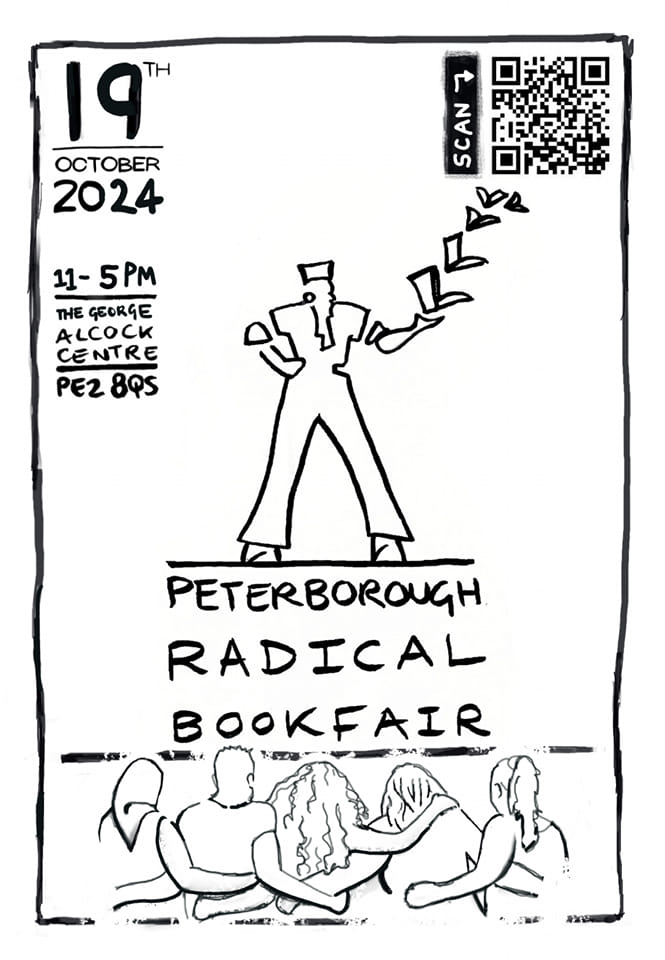
The ACN will have a stall at this years Peterborough Bookfair so come and say hi!
The ACN will have a stall at this years Peterborough Bookfair so come and say hi!
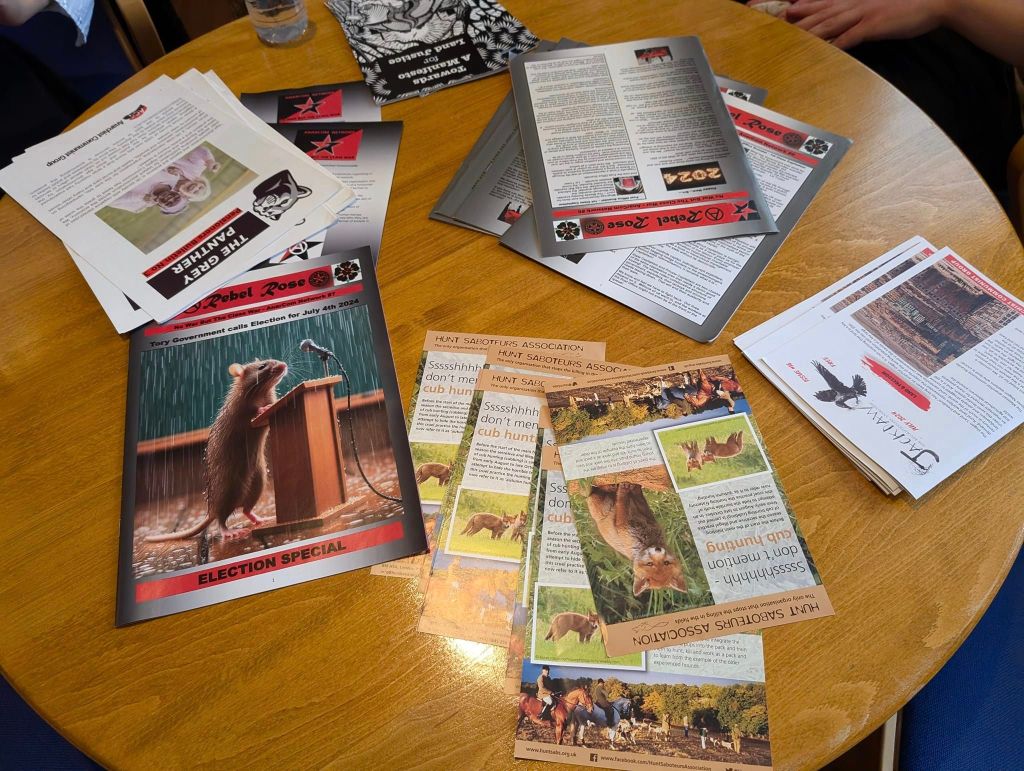
The second annual radical bookfair took place this Saturday at the Danish Church. It went ahead against a backdrop of far-right troubles across the country and a riot in Hull the previous Saturday.
The decision to go ahead was taken by the majority of the stall holders. At the same time as the bookfair there was a anti hate demo in Hull which we publicised.
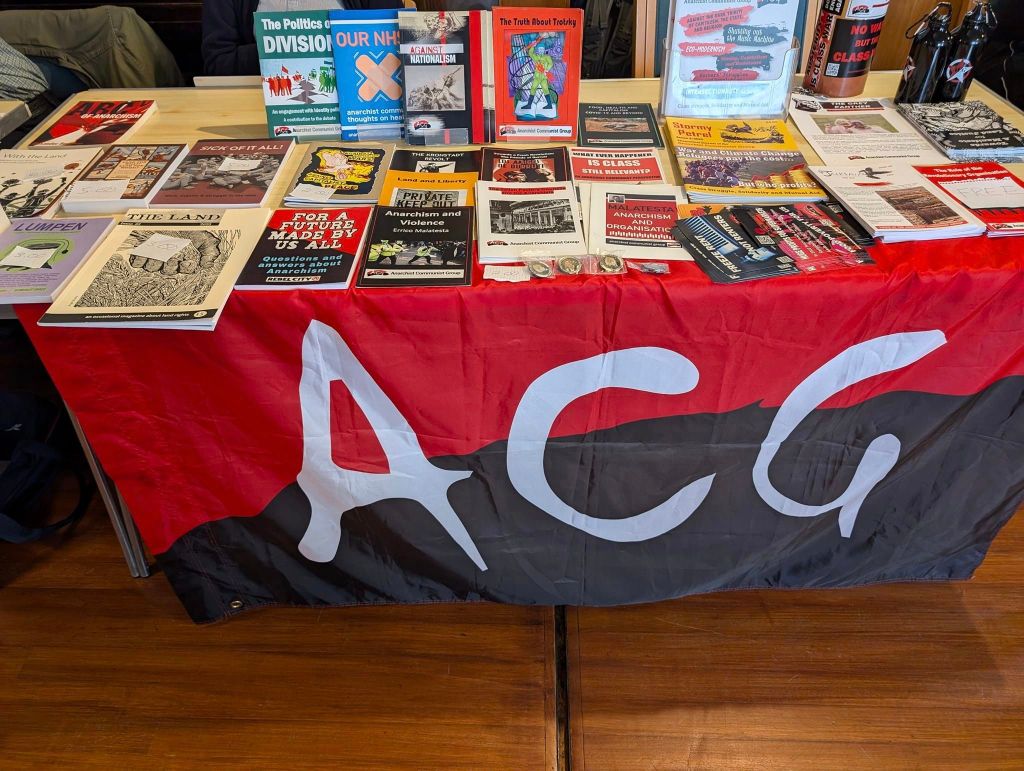
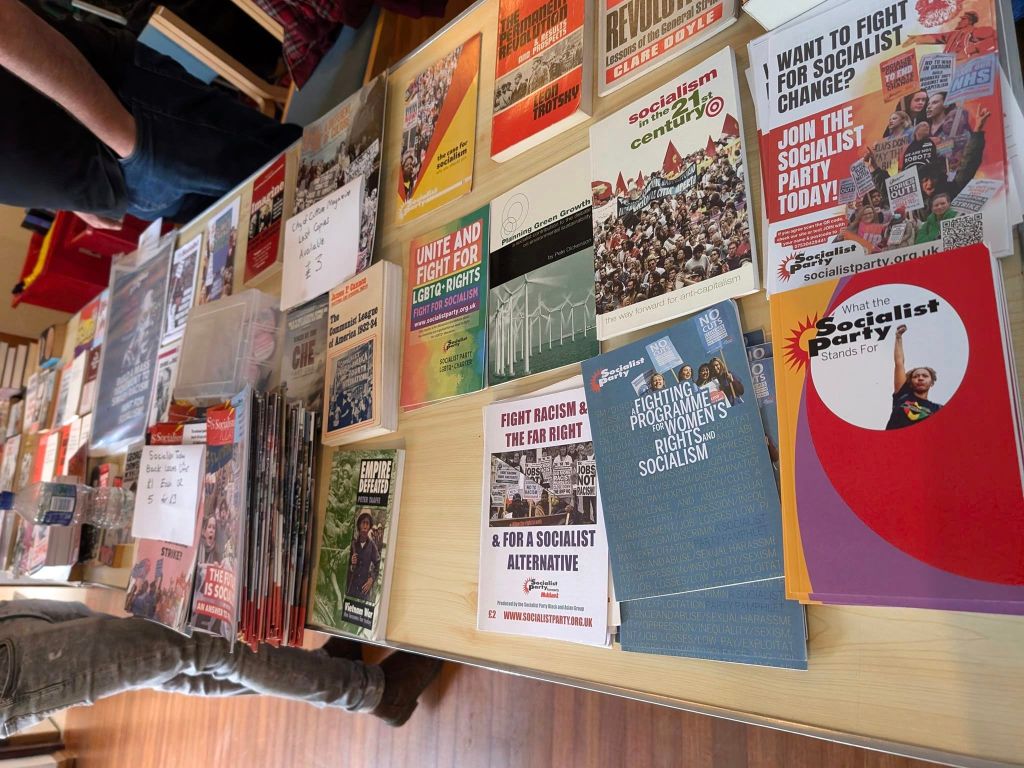
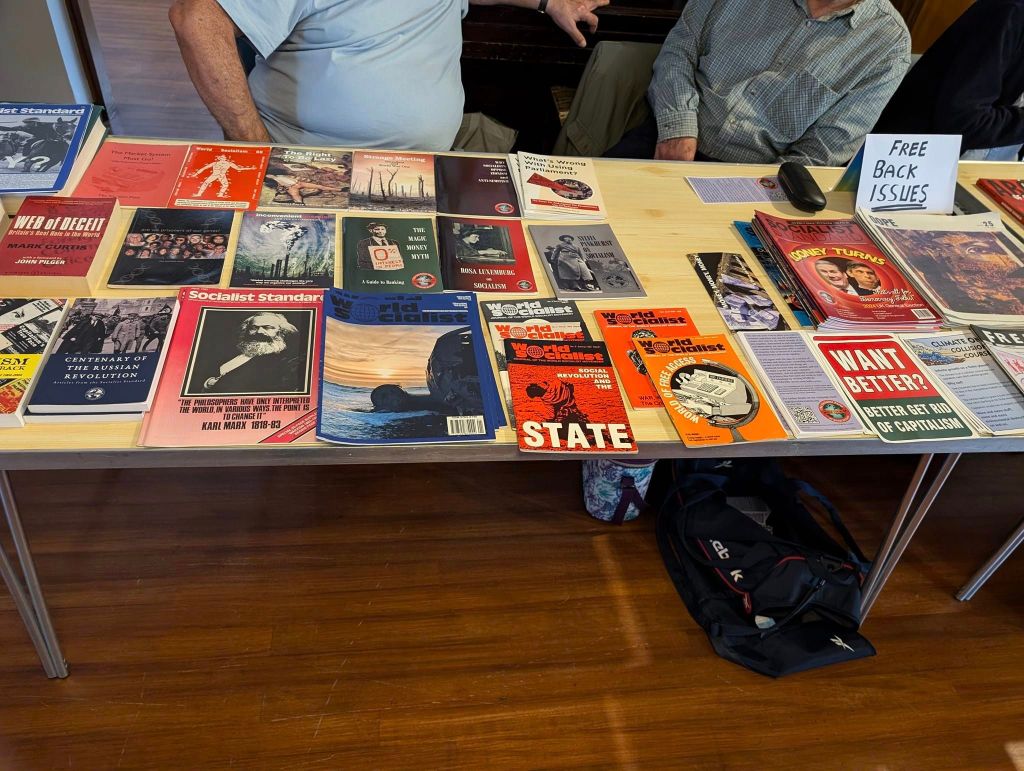
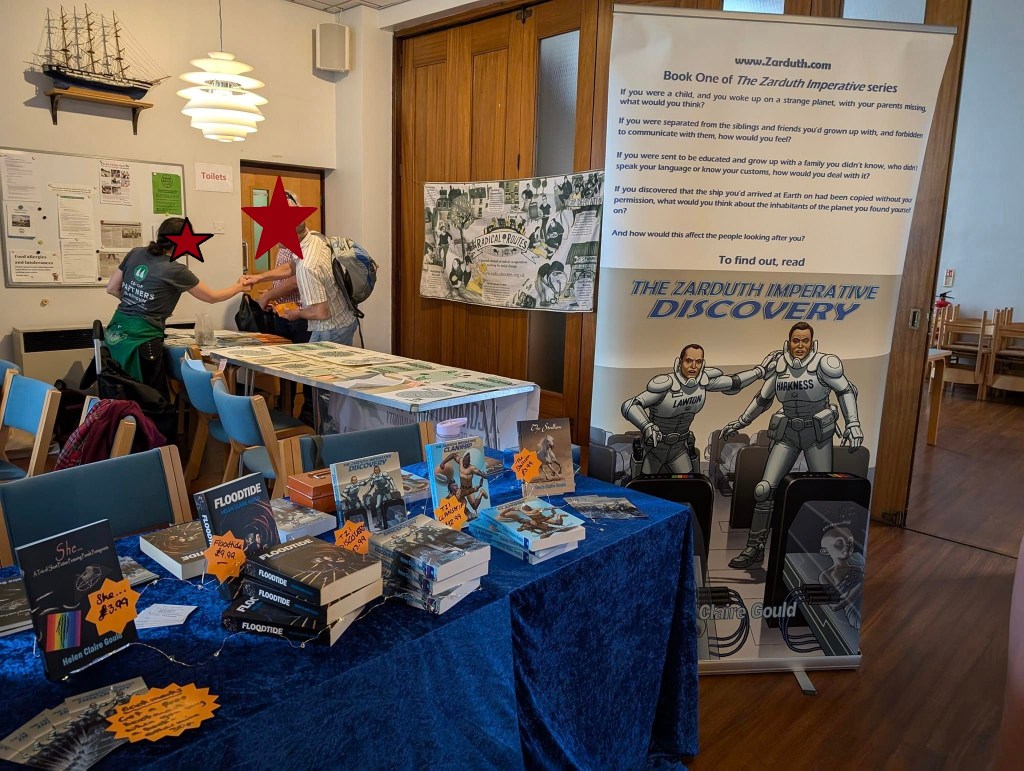
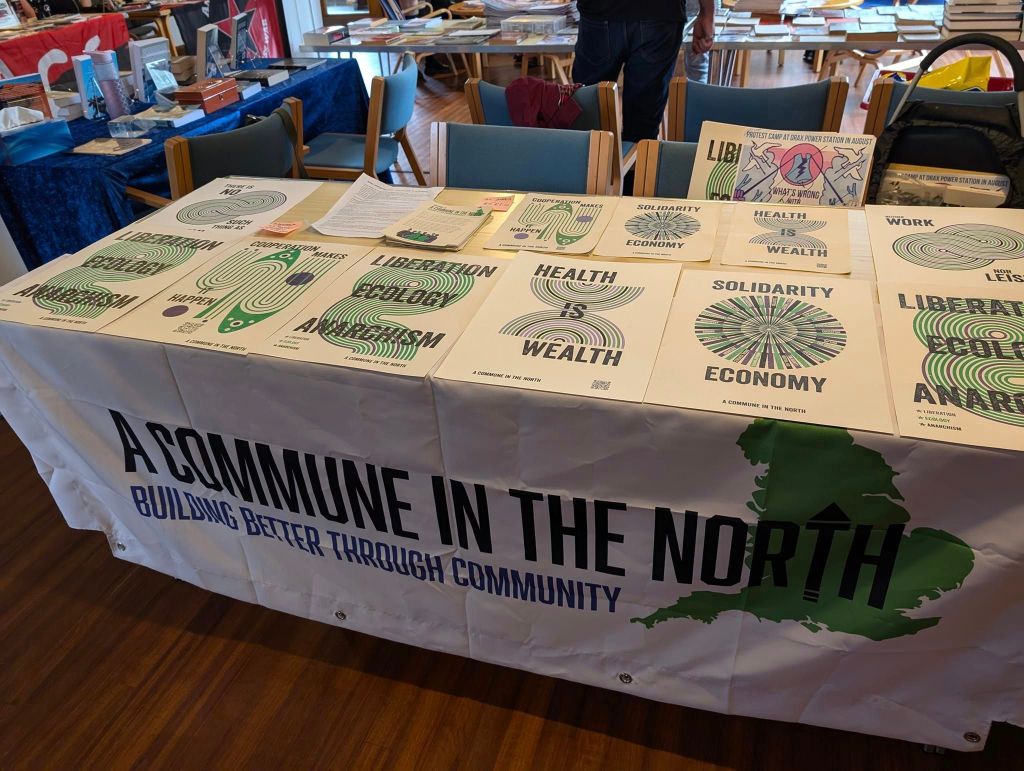
We had some stalls drop out and it was a smaller event with only 6 stalls along with a café area and a representative from Unite the Union Community Branch who was there to support us.
ACG:
Socialist Party:

World Socialism:

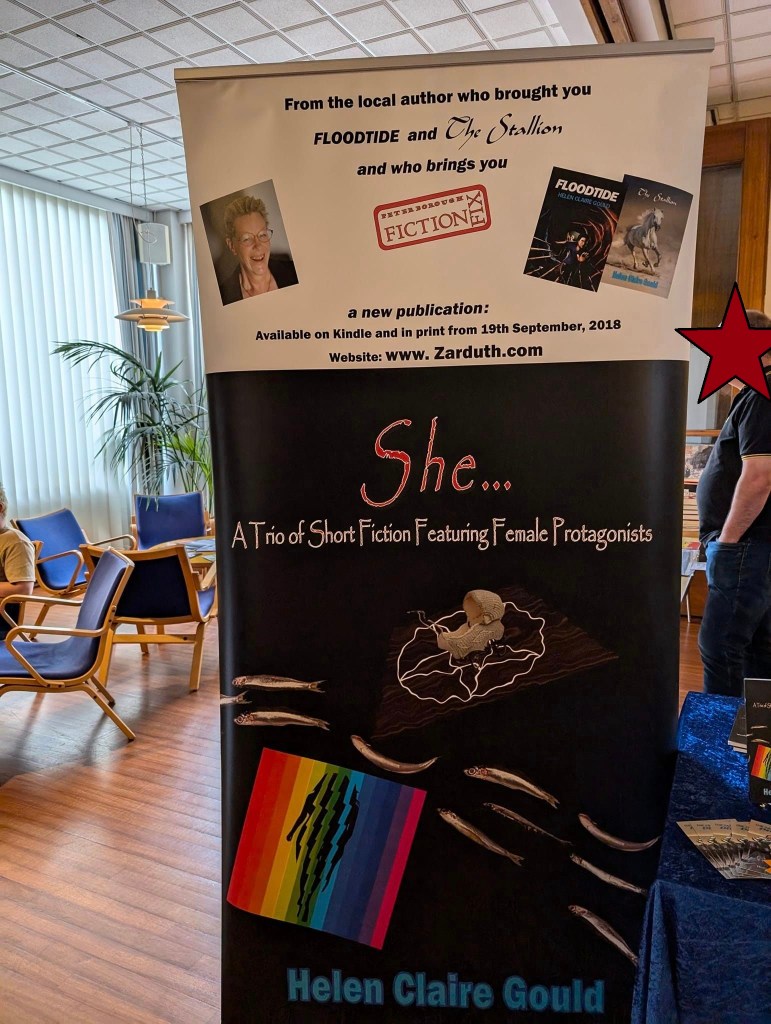
Claire Gould – Author
Commune in the North:

AnarCom Network
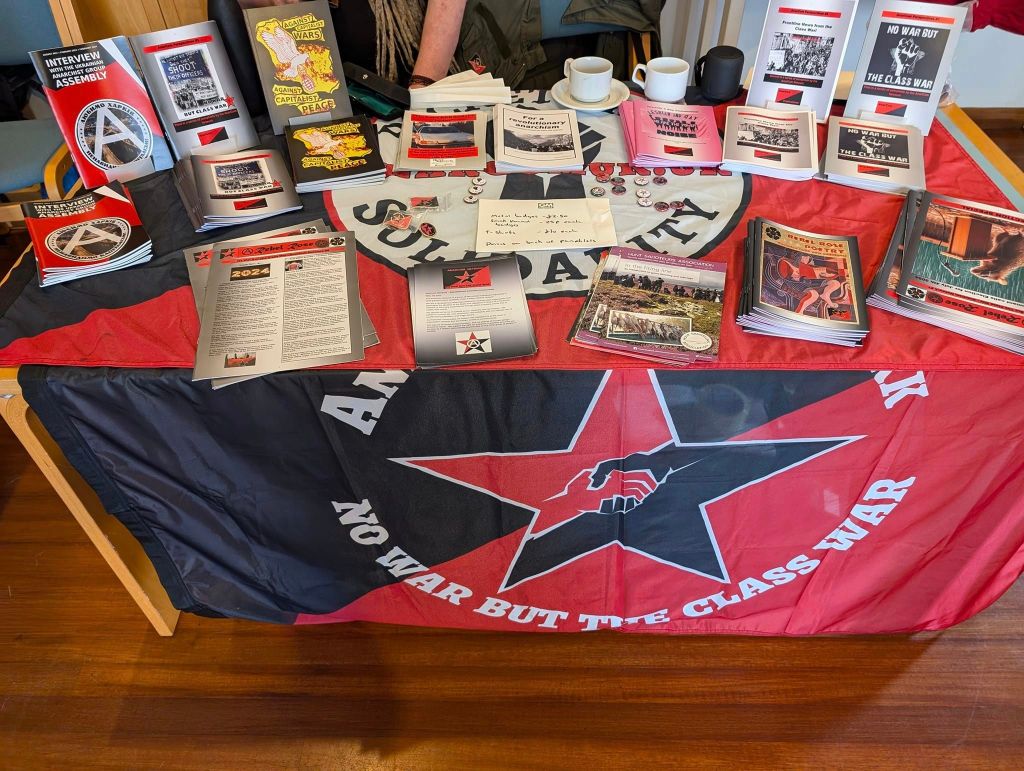
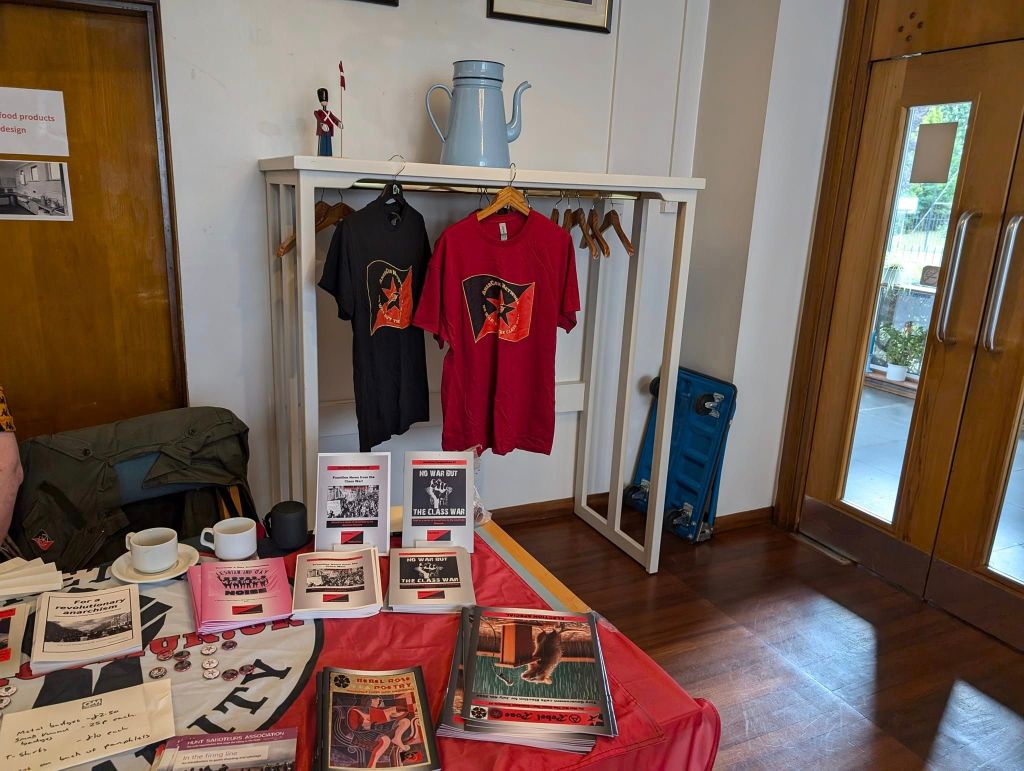
We had a few visitors (over 50 in total) and everyone seemed to enjoy the day making contacts and networking. There was an impromptu poetry reading led off by Claire and finished by our own comrade Grumpaloe who read a selection from our rereleased Rebel Rose Poetry.
Overall, another successful day and something we can build on.
See you next year when we will be back bigger and better.

The recent pogrom against perceived foreigners by the far right asserted its ‘legitimate’ concerns under the former government’s election slogan of “Stop The Boats!” This, the shameful legacy of the last Tory gamble.
Is its comparison with the Nazi ‘Kristalnacht’ against the Jews in Germany 1938 too far a stretch?
Families with children in shuttered shops being smoked out by mobs waiting outside with sticks; individuals beaten in the streets with paramilitary involvement; hotels set alight with blocked fire exits, high streets wrecked, shops shut, and graves defaced.
The numbers involved were only a fraction of those in the urban disturbances of August 2011. Then the eruption, triggered by the police shooting of an unarmed black man, was a reaction to poverty, austerity and arbitrary policing. That lasted five days. These racist riots nearly twice that, with only hundreds in place of the thousands arrested then. The priority of property before people is clear.
The recent mass acts of violence are made more disturbing because their enemy is the perceived foreigner and their targets people. People like us, other workers! In 2011, the targets were shops and the palaces of commodities by people who had nothing.
These events aren’t out of the blue. Governments of all shades have long sought to divide the working class and blame sections of it for the problems they created of low wages, austerity, poor housing and collapsing services.
Decades of demonisation and ‘othering’ reaching is crescendo from Brexit to now, with ‘take back control of the borders/country’ and ‘stop the boats’! Even one of the leading Tory leadership candidates has recently suggested a public profession of faith by Muslims should be an arrestable offence! (“Row over Tory MP’s Allahu Akbar arrest call” BBC 07/08/24). It’s not just the words that have been used by the state’s cronies. It is the treatment that has been meted out to too many migrants, people seeking refuge and asylum, that is increasingly portrayed as fair and consequently seen as acceptable by the public. The fiction of luxury hotels has hidden the barrack-like nature of accommodation supposed to last families for years. But there is worse, effectively camps of concentration.
The large-scale containment camp at Wethersfield in Essex is so overcrowded and under resourced that charities like Médecins Sans Frontières (MSF) and Doctors of the World (DOTW) are now diverting resources from sites of war, epidemic and natural disaster to provide healthcare to people seeking asylum here in the UK.
While the spark that lit this latest conflagration may well have been the misinformation spread about the suspect in the Southport atrocity, the fuel has been continuously heaped up by the mainstream media and politicians when they talk of immigration as a “problem”.
This is not a creation of social media, but also the usual suspects of the legacy press. The Mail, the Express and the Sun. Not just from populist politicians like Farage, Patel and Braverman, but also the now Prime Minister when as opposition leader he said there were “too many immigrants in the NHS”. The BBC has just amplified this when it constantly portrays migration, of whatever sort, as a “problem” to be “solved”.
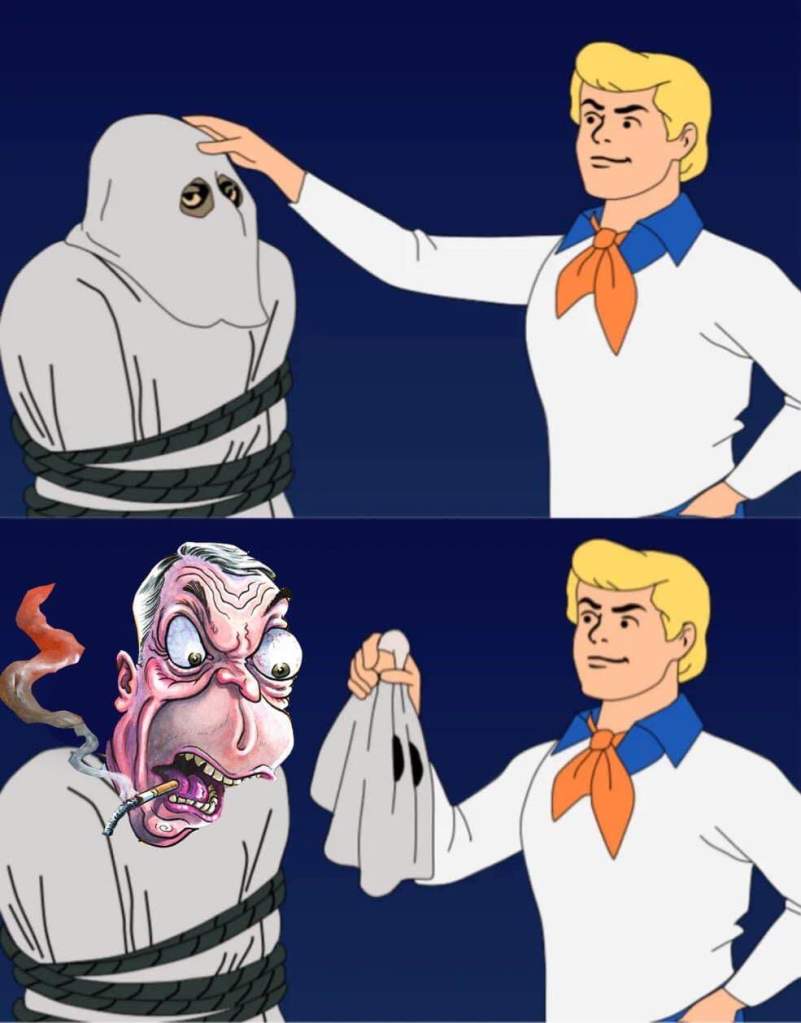
The recent election, distilling the right-wing hatred of the ruling party from the last decade, has produced an extreme parody of itself in Reform. This caricature of ‘democratic’ fascism, styling itself as the ‘Real Conservatives’, has linguistically weaponised these demonstrators as its paramilitary expression on the streets.
How have the fascists got away with it? They haven’t, they are still at it. They’ve never gone away. They have always been the ‘democratic’ states last resort against effective opposition to capitalist exploitation. Wheeled out whenever a ‘strategy of tension’ helps divide our class by fooling some into believing their interests ally with them.
The crisis of capitalism is everywhere around us, and we see it so much we virtually breathe it. War, environmental crisis, worsening mental and physical health, falling living standards, increasing crises in all the social consequences of this and the disappearance of the means of addressing them.
While crisis is in our living experience, so is the potential for its solutions. The last strike waves across the UK a year ago never reached the potential we all know they had, the potential to change something. What they did do was demonstrate that collective action can happen, as it did in the anti-racist rallies to oppose the fascist reaction recently.
Racism and poverty don’t end by good motives and verbal opposition. They end through solidarity and resistance. The social peace at home is disintegrating as our state representatives of capitalism fight their wars for profit abroad. Labour will be no different – their pronouncements on law and order will revisit us in the next wave of resistance to cuts and austerity.
The opposition to their peace at home does and must include our opposition to their armed adventurism abroad in search of profit.
To paraphrase the Dutch revolutionary Anton Pannekoek a century ago, our class is not weak because it’s divided, it is divided because it’s weak. The fascist assault on our communities is there to weaken us further. It is not a coincidence that this is happening in a time of war.

While the global capitalist system is dragging the world into ever more war and misery, those who refuse to take sides in these wars and fight to end the system that causes them, are still few and far between. So it is a promising sign that this summer several extended meetings of internationalist revolutionaries from many different countries were organized in Europe. in early June, on the last day of the anti-war congress in Prague, we agreed on the need of a short statement on capitalism and war that expresses our common positions and can serve as a base for further networking and common action. This statement was drafted after the congress ended. It was discussed, amended and approved at the internationalist meeting in Arezzo where the hope was expressed that it will be further discussed by the participants of the Prague congress and those who will gather in Poznan later this month.
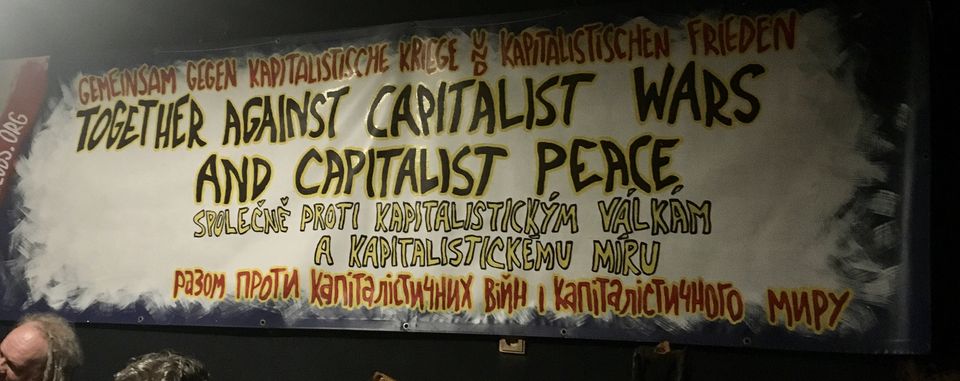
AN INTERNATIONALIST STATEMENT ON CAPITALISM AND WAR
1. In our times, all wars are capitalist wars. While the specific circumstances in which they break out may be quite different, all are rooted in the capitalist system, which is based on competition and exploitation.
2. While imperialism has been a constant feature of capitalism since its beginning, the systemic crisis which capitalism faces today and the instability it engenders both push economic competition to military conflict and create opportunities to do so. This crisis will only deepen, making it inevitable that the continuing existence of capitalism would imply the prospect of generalizing wars.
3. The working class, the vast majority of humankind, has nothing to win and everything to lose in war. It is always its main victim. National defense and national liberation means fighting and dying for the interests of one faction of the capitalist class against another. It means killing (and being killed by) other working class people for the power and profit of the class that exploits and oppresses us.
4. We reject both nationalism and democracy, which are the principal ideological tools by which the capitalist class creates the illusion that its interests and those of the working class within its borders are the same, and by which it mobilizes for war and justifies the militarization of society.
5. There are no separate solutions for the many existential threats to humankind. A peaceful capitalism, a green capitalism, a socially just capitalism are all just pipe dreams to hide the growing horror that is real. War, ethnic cleansing, genocide, ecocide, climate disasters, pandemics, poverty, insecurity, forced migration, homelessness, stress and mental breakdown will continue to worsen, together with the crisis of capitalism which causes them all. Therefore there is but one solution to all of them: closing the capitalist chapter of human history.
6. We are not pacifists. We do not call for negotiations or UN interventions, parliamentary resolutions, disinvestments, etc. We do not appeal to the ruling class to act “reasonably”, because we understand that it can’t. Instead we count on autonomous, class based resistance to capitalism. The global working class is the only social force capable of ending capitalism and establishing a human community based on the fulfillment of needs instead of the compulsion of making profit.
7. But it has a long way to go. Its struggle cannot be merely economic, it has to be political as well and confront the state. It has to refuse to submit to capitalism’s war drive. We support proletarians on both sides of any war who refuse to fight, who desert, who fraternize instead of killing each other. We support sabotage of the war machine and collective resistance against conscription, mobilization and the militarization of society.
8. But the oxygen on which the war-machine depends is the exploitation of the proletariat, the extraction of surplus value. It would be paralyzed without it. So war can’t be stopped without ending exploitation. Furthermore, to make room for the war efforts, the ruling class has to attack the social wage, impose austerity. In fighting against it, workers fight against the war, consciously or not. The more they wage this fight autonomously, without any collaboration with the capitalist class and its state, the more it can blossom into a struggle against exploitation, a revolution which puts an end to capitalism, to its wars and its miserable ‘peace’.

“Together Against Capitalist Wars and Against Capitalist Peace!”
To the comrades of ‘Beach Communism’ assembled in Poznan, Poland, 8th-14th July. Internationalist greetings and love, fun and solidarity!
A year since Varna and over 2 years since the bloody ignition of war along the fault line of nuclear imperialism!
We hope for and need your decisive class commitment to revolutionary internationalist opposition to all capitalist war, and all partisan combatant forces.
We look forward to moving beyond the conciliatory ambivalence of Varna to a decisive choice of internationalist realignment.
Procrastination is the thief of time and time is not on our side!
No war between peoples no peace between classes – No War But The Class War!
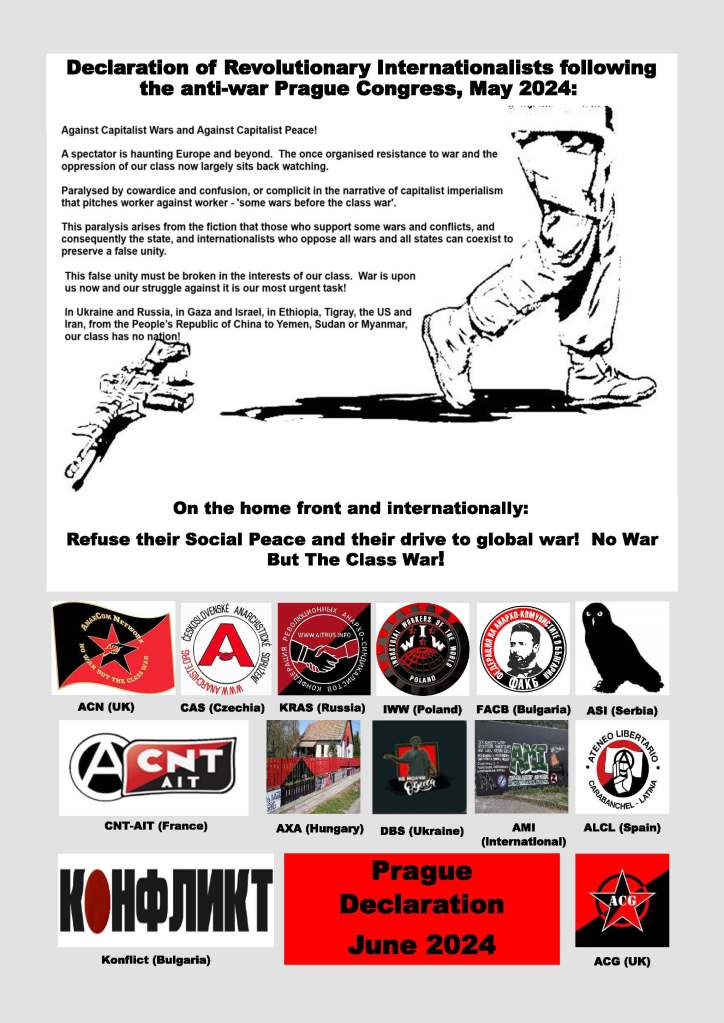

“As we approach another General Election the media circus is regurgitating the usual sickening clichés and nonsense about the difference it will all make. We are not going to go along with this by criticising the parties, policies or manifestos. Instead, we prefer to question the whole idea of parliamentary democracy, and to broaden the argument by talking about the underlying issues of authority, power and control.
Our system of government is geared to fitting in with the needs of capitalism. The small differences there are between the major parties concern how best to accommodate to the quest for profit of the multinationals and financial institutions. As voters we are presented with apparent choices of style, but we have no realistic opportunity to reject the whole sordid assumptions and practices of capitalism. So, our power to wield our votes to change things is mainly an illusion.
But that’s not all. The structure of any political party means that we are made even more passive by supporting or joining it. Parties consist of massive overbearing hierarchies where even straightforward and sensible change is virtually impossible to achieve unless the leadership already desire it. Changes that would imply removing control from the top obviously get nowhere.
Some people enter the party hierarchy with the intention of improving things from within. They very quickly get swallowed up by the dead weight of bureaucracy and neutralised by the control of those at the top, and it’s irrelevant how much support from the base they have.
The only other alternative is to get to the top themselves, but by the time they’ve managed it, the distortions and perverting effects of the hierarchy have inevitably taken their toll – so that the old status quo is now accepted. We can see this very clearly in one-time radical labour politicians or broad-left trade union officials who become more and more reactionary as they climb the ladder and leave the base behind. Meanwhile those at the bottom are left passive and powerless, and maybe worse off because of the time and effort wasted on keeping the faith in a “better leadership”.
Clearly this type of analysis applies to supposedly revolutionary parties and to trade unions just as much as to the big parties. If decision making isn’t placed squarely at the base, then the mass of ordinary member’s maybe active, but only in doing what they are told, what is permissible, and they are in no position at all to challenge the status quo. These days most organisations involving politics make a big show of internal democracy, but when it comes down to it those at the top have to agree before anything gets done.
But we have to take the analysis a bit further than this. Most people seem fully aware that they have no control, but still manage to muster up enough motivation to support the big parties and to make no effort to challenge bureaucratic and authoritarian control. We can present alternatives to hierarchies and powerless membership – in this paper we consistently offer ideas and examples of rank-and-file control, assembly – based decision making, mandated and re-callable delegates and so on. Such ideas are acceptable; people agree that they would be better. But there’s a tendency to say, “it won’t work” (even when given cast iron evidence of it working), and to not really want or be able to apply the ideas in their own real lives. It looks as though people feel more comfortable being passive, don’t want the bother of being responsible, in fact desire to be dominated. Why is this?
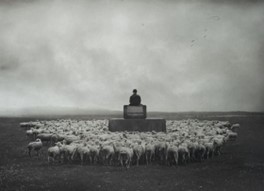
People aren’t completely logical; we all behave irrationally quite a lot of the time. So while working class people want freedom, struggle to make our lives better and recognise the injustices of society, other parts of us also desire to be controlled to let others make our decisions for us. That is why it is possible for Thatcher to attract so many of our votes. All of the other parties have massive blind spots to the problems of power and authority too and can’t afford to examine these areas because it would expose their own (equally large) shortcomings.
In this society virtually all of our lives are lived under the shadow of forms of authority that are completely out of our control. It is built into us to be subservient. It’s a difficult pattern to break down, but the best path is in active struggle. Real lived experience of battling against authority begins to give us confidence in our own collective power.
Experience of the double-dealing, betrayal and manipulation of politicians and trade union officials clinging onto their positions in the hierarchy tests our faith in their influence, whilst we know we can trust one another. So, rank and file control is not enough – we need also to be conscious of why we need it. Because otherwise we will find ourselves trusting the next plausible dominator who comes along, and the gains of our experience of collective self-control will be lost.”
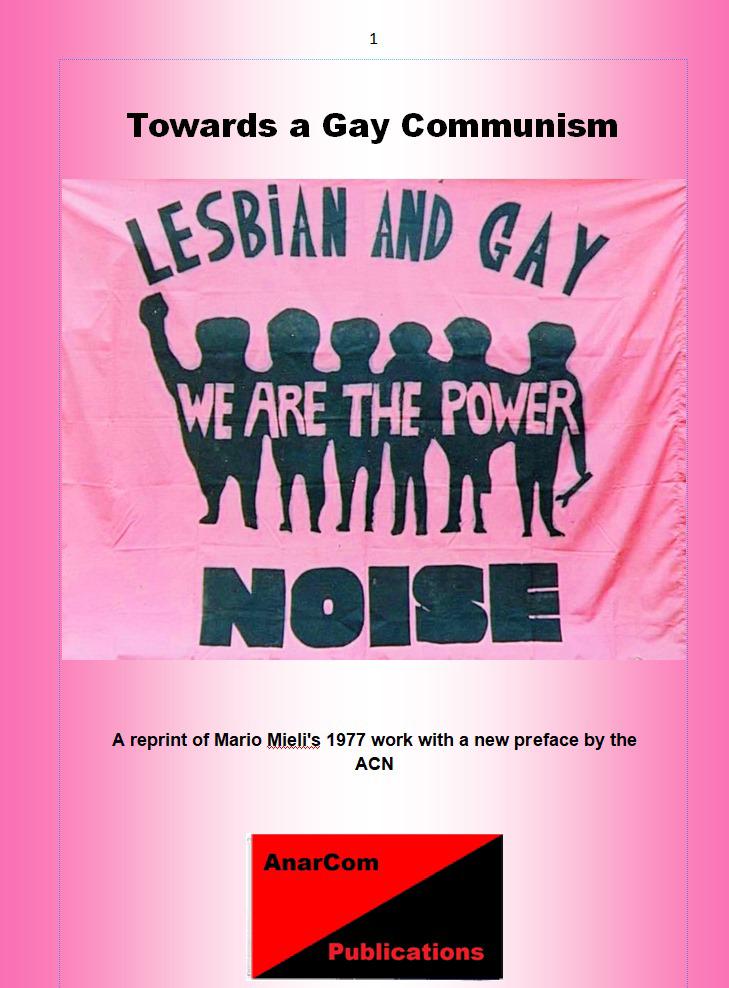
Pamphlet available £3.50 each plus post and packing


Hull Radical Bookfair – 10th August 2024. If you would like a stall or to do a talk/presentation please get in touch ASAP.
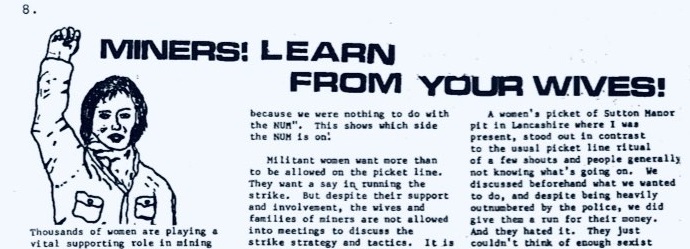
On the 40th anniversary of the Battle of Orgreave, we re-publish an article by the revolutionary group ‘Wildcat’ from the time on the central role of women to the success and extension of the strike towards its wider generalisation. A lesson that still inspires us.
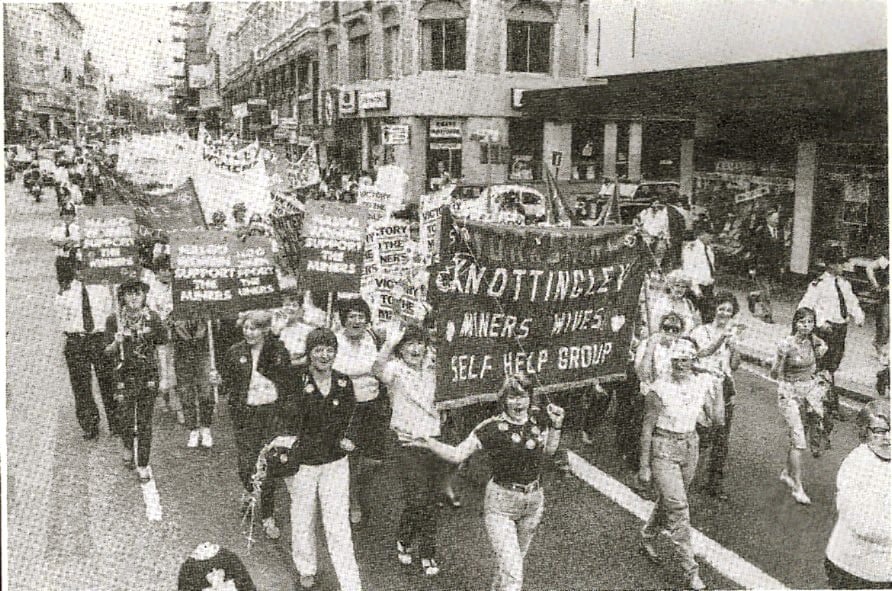
Thousands of women are playing a vital supporting role in mining areas. Without this involvement initiated by the women themselves miners would have been in a far weaker position to fight. As a woman canteen worker at Parkside pit said: “it mustn’t be forgotten that this strike wouldn’t have lasted more than three months without the self sacrifice of the miners wives and the participation of thousands of women in support groups”.
However, many NUM branches have refused to give money to the kitchens. Women from Fitzwilliam in Yorkshire say that they haven’t had a penny from the union.
Other branches have tried to impose strict conditions on the way money is used in the kitchens, to make sure the women know who’s boss. Women from Upton Miners support Group refused NUM money. They said “they wanted to give a donation on condition that they had to say in the menu! But we are answerable to nobody!”. At Tower Lodge in Hirwaun, Wales, NUM officials insisted that £100 collected by the women had to go to them instead. A miners wife told how “it’s like working with the Mafia. Terry Thomas (Vice President of South Wales NUM) came chasing after the money, and I wouldn’t be surprised if Neil Kinnock wasn’t far behind”.
When women want to go beyond the kitchen sink and go picketing, they have had an even harder time of it. At Wistow colliery miners themselves organised a picket of the local power station, inviting all their supporters along. A miner described what happened: “The NUM officials came down and told us to leave because the pickets had not been organised by the NUM and not all the pickets were NUM members. They also told the female pickets to get back to the soup kitchens ‘where they belonged’. One official went over to the police lines, inviting them to deal with us as they wished, because we were nothing to do with the NUM”. This shows which side the NUM is on!
Militant women want more than to be allowed on the picket line. They want a say in running the strike. But despite their support and involvement the wives and families of miners are not allowed into meetings to discuss the strikes strategy and tactics. It is vital that everyone who is actively supporting the strike is treated as equal in taking decisions about what to do and how to conduct it. Women from a Welsh pit village were told why they were banned from strike committee meetings – they had criticised the running of the strike, whereas the men were afraid to criticise “their own” leaders.
Why are union officials so hostile to women becoming more actively involved in the strike? This demand challenges the very heart of trade unionism. For once you let the miners wives into the branch meetings, and elect them onto strike committees, a precedent is established. Once non-miners are allowed to fully participate in the strike, the way is open for more and more people to be drawn into the struggle until what you have is no longer a trade union dispute but a mass strike! In this situation, union leaders would lose any special claim to authority. They recognise this threat to their power. They are afraid of women activists who bluntly refuse to do what they tell them. No wonder they tell the women to “get back to the kitchens”.
Women’s Pickets
Women who want to go picketing have met other problems. If they are the wives of militant miners who have already been arrested, they are reluctant to risk arrest as well, especially with children to look after. There is no reason why this should be organised by women , men on strike should take their share of caring for the children and let the women go picketing. Not just because everyone should be involved, but also women make very good pickets. For many it is their first experience of apicket line but they know what to do.
A women’s picket of Sutton Manor pit in Lancashire where I was present, stood out in contrast to the usual picket line ritual of a few shouts and people generally not knowing what’s going on. We discussed beforehand what we wanted to do and despite being heavily outnumbered by the police we did give them a run for their money. And they hated it! They just couldn’t think of enough sexist insults to fling at us there was a feeling of solidarity and collectivity that comes from struggling together. Without the union leaders and union traditions to tell them how to behave, which the men have, women are able to simply do what they decide to be done.
Wildcat does not support the aims of the Greenham movement, but pickets can learn from their organisation. The women at Greenham Common in 1982 and 1983 had no officials to say what they could do. They organised several hundred people around an 11 mile perimeter fence at night keeping one stop ahead of the police by using walkie-talkie radios, organising actions through group delegates to small central planning meetings making sure that all participants knew what was going on and everyone playing their part, however small.
What people involved in the miners strike have learnt, that the Greenham women never did, is the need to respond to state violence with our own violence. As one miners wife puts it: “I’ve always respected the police, but I’ll tell you what, I’ll watch a Bobby being kicked to death in the street in the future and I’ll walk across to the other side. They show their true colours now.”
Far from being the weakest section of the working class, unable to fight back against the bosses onslaught because they are marginalised, women have shown time and again that it is their very lack of involvement in the organisations which hold men back, that enables them to organise themselves and carry out their own decisions and actions. This puts them at the forefront of working class struggle. If miners are to win, they must learn from their wives and mothers, girlfriends and daughters.
 AnarCom Network